AP Lit rubric: http://goo.gl/d6QZe2
Essays will be passed back at the start of final exams.
Monday, June 1, 2015

Wednesday, May 27, 2015
Thursday, May 28
Target: to consider the effect of your presentation on your audience
1. Netflix reminder
2. Share a sample slide for a critique
3. TOMORROW is the final vocabulary test!!!!
Wednesday, May 27
Target: to begin discussing the structure of your presentation
1. Turn in textbooks to Metal Shop. Any more Thank you for Arguing??? Please?????
2. Create your Google Slides and share. How will you structure your slides so they cover all the elements to analyze? See assignment AGAIN.
Which scene will you present to us with a thorough analysis of Film Techniques and Rhetorical Devices that contribute effectively to the purpose of the film?
3. Vocabulary Volleyball....I hope.
Monday, May 25, 2015
Tuesday, May 26
Target: to complete SOAPSTone for your documentary film, and set the agenda for the rest of the week.
1. SOAPSTone--write it on your shared notetaking doc.
2. Compare notes on the details: which scenes did you find memorable or important?
3. Make a game plan. If there is time, make a copy of the Slides and share with your group.
VOCABULARY VOLLEYBALL--last 10 minutes Lesson 8
Thursday, May 21, 2015
Friday, May 22
Target: to begin the collaborative process of working together on your Documentary Film Project
1. Take Vocabulary Test #14
2. With your group, decide who will be the
- "Discussion Director,"--this person is in charge of the agenda for each day's work.
- the "Time Manager,"---this person is responsible for keeping people on task during class, and timing the final presentation.
- the "Final Editor,"---this person is in charge of closely reading the slides when you are finished, looking for grammar or formatting errors.
- the "Connector"---this person is in charge of communication for your group. This person will text or email or call everyone when your group has set up times to work together outside of class.
REVIEW the Documentary Film assignment so you are clear on EXACTLY what you are being asked to do.
See the Collaboration Rubric I will use next week to assess your work in class:
Collaboration
| |||||
0
|
1
|
2
|
3
|
4
| |
| |||||
| |||||
| |||||
| |||||
Comments:
| |||||
3. RESEARCH "SPEAKER": Next, work on using Google searches to find more about your director and their associated production company. Who is behind this film? Who funded it? Can you find any other films by them? What can you find out about SPEAKER and their ETHOS? Do they seem credible? Any concerns?
4. RESEARCH "OCCASION": Do some reading about your subject and any recent or historical events that may have inspired the filmmaker to make the film or may help you understand the context of the film. For example, if you were watching Southern Rites you might read news stories that were published about the segregated proms before the film was made AND/OR read about segregation in the South during the Civil Rights era.
Add to the group copy of the note-taking sheet I gave you.
REMEMBER TO WATCH this weekend!
Wednesday, May 20, 2015
Thursday, May 21
Target: to practice analyzing film techniques
1. 10 minutes to SUBVOCALIZE and edit As I Lay Dying essays!!! TURN IN YOUR BOOKS TO THE LIBRARY.
2. Continue discussing film vocabulary. See samples notes on "An Inconvenient Truth"
3. Watch "Rear Window" clip and beginning of "Miss Representation"---practice identifying film techniques and effect. Use NOTES: TAKE NOTES WHILE YOU WATCH!
Use these as you watch at home over the next few days! You may write them online or use the paper copies!
Use these as you watch at home over the next few days! You may write them online or use the paper copies!
REMEMBER permission slips are due TOMORROW!
Tuesday, May 19, 2015
Monday, May 18, 2015
Tuesday, May 19
Target: to write an on demand essay demonstrating your close reading of the novel As I Lay Dying
1. Reminder for make up testing tomorrow.
2. Review essay prompt and poem. Define PARADOX.
3. VOCABULARY CLARIFICATION: Test 14 is THIS Friday, full test is NEXT FRIDAY the 29th.
Sunday, May 17, 2015
Monday, May 18
Lyubov Popova, 1912-13, Air Man Space
Target: to discuss Cash's "neo-cubist" chapter and find details that are connected to one of the big ideas at the heart of the novel
1. Cash as a "Neo-Cubist." Work on questions in partners. Post your assigned question and answer here: https://goo.gl/AxNnct SECOND PERIOD LINK IS HERE: https://goo.gl/EzycOL
2. Review theme statements: https://goo.gl/Gvw46B
Reminders:
- In class essay tomorrow on AILD
- Senior Boards are Wed and Thurs
- LAST vocabulary test befor the final is next FRIDAY.
Thursday, May 14, 2015
Friday, May 15
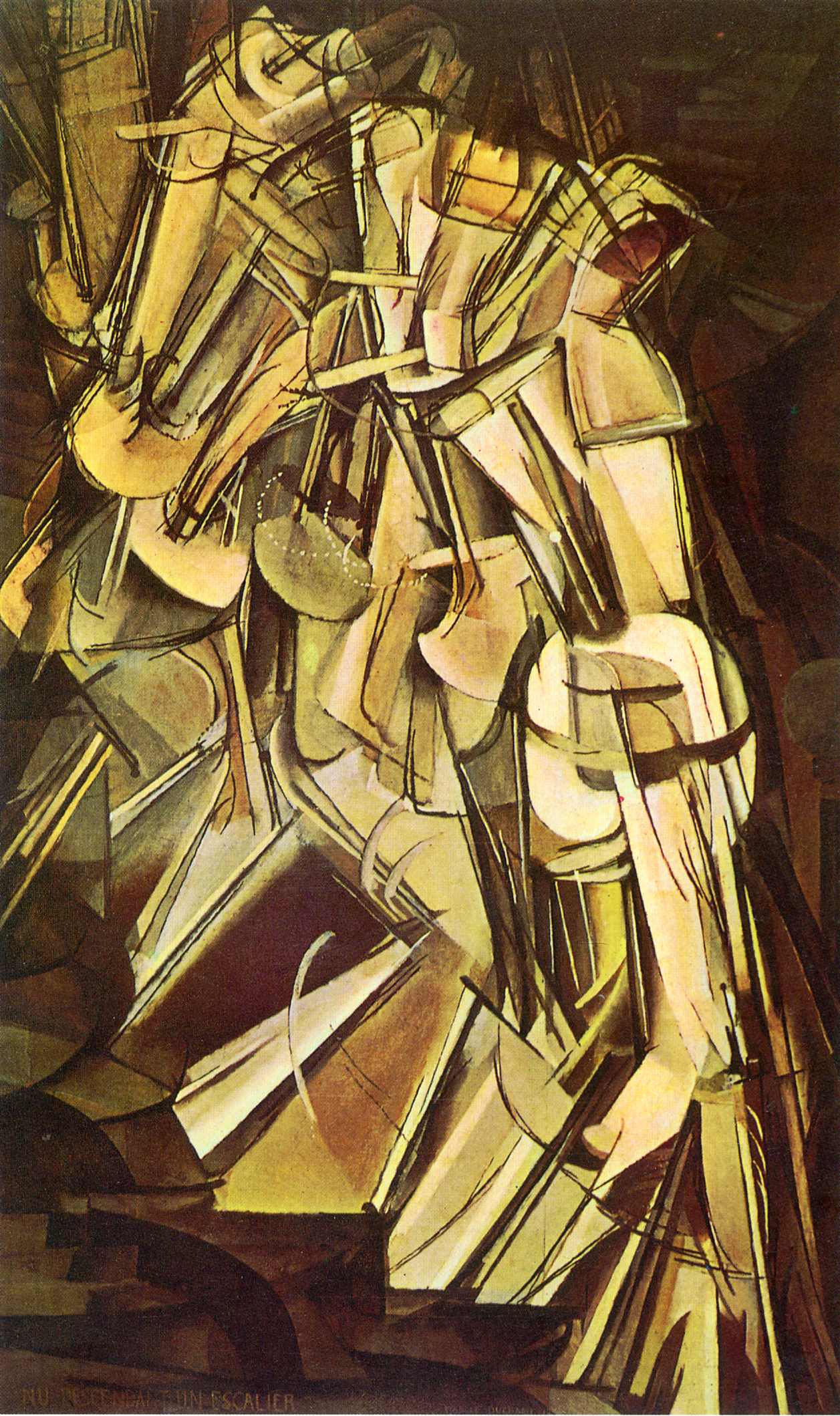
Target: to see how Faulkner is influenced by Modernist art--how form (in this case, 15 first person narrators) can support purpose/theme
1. Heads up! Review documentary film lists for next week: Documentary Film Project
2. Darl as a Scapegoat: Reread the scene where Darl is taken away. Then, with a partner, attempt to form your own answers to the questions on the handout. Share out in 15?
3. Review a few pieces of Modernist Art after you have read the description of Modernism on the handout:
Marcel Duchamp/ "Nude Descending a Staircase": http://uploads4.wikiart.org/images/marcel-duchamp/nude-descending-a-staircase-no-2-1912.jpg
Pablo Picasso/ "Three Musicians": http://www.pablopicasso.org/images/paintings/three-musicians.jpg

Georges Braque/"Violin and Candlestick": http://uploads3.wikiart.org/images/georges-braque/violin-and-candlestick-1910.jpg

Joseph Stella/ "Brooklyn Bridge": http://www.tfaoi.com/am/1am/1am272.jpg

Calvin explains Cubism: http://eriklundegaard.com/item/calvin-and-hobbes-explains-fox-news-10-years-before-fox-news
3. Answer questions 1-4 after discussing them with a partner.
MONDAY: Cash as a Neo-Cubist?
Tuesday: In class essay on As I Lay Dying. I want to see you apply a given theme to your understanding of the novel.
Last vocabulary list! Lesson 14: https://quizlet.com/12313648/power-plus-book-three-lesson-14-flash-cards/
Last vocabulary list! Lesson 14: https://quizlet.com/12313648/power-plus-book-three-lesson-14-flash-cards/
Wednesday, May 13, 2015
Thursday, May 13
Target: to return to As I Lay Dying and revise your understanding of Addie Bundren
1. Silently review Cora, Addie and Whitfield's chapter.
2. Review your "quiz" and EBC charts from two weeks ago.
3. Look at the theme statements. How can we apply them to Addie's situation?
4. The Barn Burning....share text specific questions here:
TOMORROW: Review Modernism and Cash
IN CLASS ESSAY on AILD Monday or Tuesday.
Monday, May 11, 2015
Tuesday, May 12
Target: to study rhetorical terms from the practice test, using a dictionary and online tools.

1. Take the WASC survey first, please. WASC survey
2. Here are links to online tools that can help you study for tomorrow's test:
Multiple choice practice: learnerator.com
Rhetorical terms: Find the AP language course there! memrise.com
Quizlet flashcards: https://quizlet.com/17709631/ap-language-rhetorical-terms-flash-cards/
I will be here early on Wednesday if you need a place for your backpacks.
Review these reminders again before the test:
Students must bring ID to the test.
Students must arrive at 7:30 AM for the morning test sessions.
Students arriving late may/will not be allowed into the testing location, after test has started.
Bring water for the test session.
Bring your own No. 2 pencil and blue/black pen, if they need it.
2. Here are links to online tools that can help you study for tomorrow's test:
Multiple choice practice: learnerator.com
Rhetorical terms: Find the AP language course there! memrise.com
Quizlet flashcards: https://quizlet.com/17709631/ap-language-rhetorical-terms-flash-cards/
I will be here early on Wednesday if you need a place for your backpacks.
Review these reminders again before the test:
The AP LANGUAGE TEST is Wednesday, May 13 in the Vintage Little Theater
NO BACKPACKS! You can leave yours in my classroom if you need somewhere to keep it while you test.Students must bring ID to the test.
Students must arrive at 7:30 AM for the morning test sessions.
Students arriving late may/will not be allowed into the testing location, after test has started.
Bring water for the test session.
Bring your own No. 2 pencil and blue/black pen, if they need it.
x
Friday, May 8, 2015
Monday, May 11
Target: to finalize your outline for the Huxley/Orwell argument and review multiple choice questions for the last time.
Other sites to visit tomorrow: Quizlet, Memrise, Learnerator & DON"T FORGET YOUR AP TEST TO REVIEW.
2. 10 minutes: Make it clear...show me your outline!
3. Review 2007 multiple choice questions.
Be bold, and mighty forces will come to your aid.
--Johann Wolfgang von Goethe
Thursday, May 7, 2015
Friday, May 8
Target: to practice setting up an argument
1. Review the Argument stylesheet from Thursday.
2. Read the high end paper from 2007 samples.
3. With a partner, assign one of you the "pro" side and the other the "con" side. Then fill out a rough graphic organizer (pro/con/response). (5 min)
4. Now, independently, form your argument for or against the Postman's claim. What will your claims be? What evidence will you use to support them? Do you have any evidence to discredit the other side's claims in a rebuttal?
5. 4 square debate! Here is what we talked about. YOU provide the examples: https://docs.google.com/document/d/1LKNZr3x_0mP_d0cHisZdwPDfbW8mtovGhJgIjtXtr8I/edit
Tuesday, May 5, 2015
Thursday, May 7
1. Bellringer: http://www.cagle.com/news/baltimore-riots/
2. Argument style sheet: https://goo.gl/KlaAM1 and try a debate with a sample prompt.
3. Read the student samples from the Lord Chesterfield, Lady Montagu, and William Hazlitt prompts. What are your takeaways? Open your AP EXAM stylesheet and take notes!
Here is mine where I took notes for the whole class: https://docs.google.com/document/d/1bGIGa3yC8rvHphnnxiR3Ar9FGEO3Whf61DGbdNgQWtg/edit
2. Argument style sheet: https://goo.gl/KlaAM1 and try a debate with a sample prompt.
3. Read the student samples from the Lord Chesterfield, Lady Montagu, and William Hazlitt prompts. What are your takeaways? Open your AP EXAM stylesheet and take notes!
Here is mine where I took notes for the whole class: https://docs.google.com/document/d/1bGIGa3yC8rvHphnnxiR3Ar9FGEO3Whf61DGbdNgQWtg/edit
Wednesday, May 6
Target: to continue determing purpose and tone, by "decoding" diction, detail and syntax.
A "bellringer" for today: Discuss the argument in this political cartoon: http://apcentral.collegeboard.com/apc/public/repository/ap10_frq_eng_lang.pdf
Volunteer to judge the Senior Boards! When: May 20 and 21 from 5:30-8:00 pm
Senior Boards sign up
1. 1st period: Finish David Brooks' SOAPSTONE and analysis--write your thesis!
2nd period: Read and write for Julia Blount's post.
2nd period: Read and write for Julia Blount's post.
2. 2nd period: Fill out your score sheet for the AP practice test.
DON'T FORGET: complete the multiple choice practice questions BEFORE Thursday's RTI session so we can review them together.
TOMORROW: Argument style sheet and 4 square debate, using an "easy" graphic organizer that you must use!
Monday, May 4, 2015
Tuesday, May 5
Target: to practice finding the PURPOSE and TONE, while identifying the devices that work together to communicate that: diction, detail, and syntax
1. Vocabulary Lesson 13
2. Pass back argument papers (Question 3). Add #2 and #3 to your score sheet and calculate your final score.
3. Finish the lesson from yesterday.
Tomorrow we will practice argument, after I share some thoughts after the practice test. The student sample papers are here for the argument prompt : http://apcentral.collegeboard.com/apc/public/repository/ap07_englang_op_q3.pdf
Sunday, May 3, 2015
Monday, May 4
Target: RHETORICAL ANALYSIS
FIND THE PURPOSE and work from there!
A great review site: http://eng101online.com/Lessons/rhetoricalanalysis/rhetoricalanalysislesson_print.html
A great review site: http://eng101online.com/Lessons/rhetoricalanalysis/rhetoricalanalysislesson_print.html
- Review Sanders piece from 2007 practice exam
- Look for the relationship between the organization and purpose and mode
- Look for important diction
- Look for important detail
- Look for sentence length and type, and then tone
- SOAPSTONE Julia Blount: http://www.salon.com/2015/04/29/dear_white_facebook_friends_i_need_you_to_respect_what_black_america_is_feeling_right_now/
- SOAPSTONE David Brooks: http://www.nytimes.com/2015/04/24/opinion/david-brooks-love-and-merit.html?rref=collection%2Fcolumn%2Fdavid-brooks#story-continues-4
Write an intro paragraph for one of the new pieces that ends with a thesis that MOST OF ALL communicates your understanding of their purpose.
Friday, May 1, 2015
Thursday, April 30, 2015
Important Information for AP testing
The AP LANGUAGE TEST is Wednesday, May 13 in the Vintage Little Theater
NO BACKPACKS! You can leave yours in my classroom if you need somewhere to keep it while you test.Students must bring ID to the test.
Students must arrive at 7:30 AM for the morning test sessions.
Students arriving late may/will not be allowed into the testing location, after test has started.
Bring water for the test session.
Bring your own No. 2 pencil and blue/black pen, if they need it.
Bring calculators, if they are allowed.
Sunday, April 26, 2015
Monday, April 27
Target: to take the CAASP test for English
1. Listen to Instructions/Register/Begin Smarter Balance Summative Adaptive Test
2. Leftover time? Review your claims about Addie in As I Lay Dying
Schedule for the rest of the Week
Tuesday: 2nd part of the SBSAT leftover time? Discuss Whitfield
Wednesday: Classroom Activity for Performance Task (30 min) leftover time? review Rhetorical Analysis Practice Test Here is my LAST stylesheet: PLEASE READ! RA Stylesheet
RTI: come to REVISE your RA Sanders Analysis
Thursday: Performance Task (part 1) leftover time? Discuss R/A prompts from last week using sample essays.
RTI: Multiple choice practice
Friday: Performance Task (part 2) leftover time? Finish R/A prompts or new SOAPSTONE?
next Monday 5/4: vocab 13 test/review multiple choice practice AP test questions/return arguments
Saturday, April 25, 2015
Thursday, April 23, 2015
Friday, April 24
Target: to create an evidence-based claim about the character Addie Bundren, after reading her chapter in the novel.
1. Who was Addie Bundren? As you carefully reread her chapter, pull out three related details and put them into this Evidence-Based Claim chart. (You will have to make a copy first.)
2. Tell me what each of them means and why they are important signifiers of who she was.
3. Make those relationships explicit by discussing the connections between the details.
4. NOW--this is INDUCTION, remember? MAKE A CLAIM/CONCLUSION/INFERENCE about Addie based on these details. Remember a claim is NOT a statement of obvious fact, it should INSIGHTFUL, and the product of your critical thinking. GO DEEP!
5. When you have finished, share your doc with ONE PERSON in your group (partner up), and ask them to make comments on your claim or your commentary. Share with ME when you are done: jenlamonte@gmail.com
READ TO 197 (or around 210) in the new books for MONDAY.
Wednesday, April 22, 2015
Thursday, April 23
Target: to submit a thesis statement to me on a google doc for TWO rhetorical analysis prompts.
- Read both essays (Lord Chesterfield and Lady Montagu)at the front of the packet I gave them yesterday. Please follow the same process you went through yesterday: SOAPSTONE and then a more detailed listing of devices, etc. This should take about 30-35minutes.
- Here is link for you to post your thesis statement for a rhetorical analysis essay...for both pieces if possible:
FIRST PERIOD: MONTAGU AND CHESTERFIELD
SECOND PERIOD: MONTAGU and CHESTERFIELD
REVIEW the thesis statements. Where do you see strengths? Weaknesses? We will discuss these on Monday.
NOTE: These are really tough pieces! Don't worry if you are struggling here.
READ AS I LAY DYING for class tomorrow, focusing especially on the CORA/ADDIE/WHITFIELD trifecta.
Wednesday, April 22
Target: to practice setting yourself up to write a Rhetorical Analysis
1. Read the Ellen Goodman essay on the last page of the packet from today.
2. Complete SOAPSTONE somewhere on it or on scratch paper. Share with your group AFTER you have tried this on your own!
3. THEN, fill out the new RA graphic organizer---you may collaborate if you need to on this.
4. Try this again with the Hazlitt prompt as well, if there is time.
Monday, April 20, 2015
Tuesday, April 21
Target: to look for archetypes in the novel so far
1. Review character credibility form results.
2. Discuss archetypes in literature you are familiar with. Research ones you aren't.
3. Discuss the journey archetype in this story so far.
4. Read one chapter together. Ask questions. Answer collectively.
READ to page ___179___for Friday's class.
READ to page ___179___for Friday's class.
Sunday, April 19, 2015
Monday, April 20
Target: to self-evaluate and consider your AP score
1. Vocabulary Test Lesson 12--and Prom pictures?
2. Read a high/medium/low paper on apcentral: from 2007
Discuss what you get from reading these papers:
What does it mean to synthesize a source, instead of just "dropping [sources] into sentences"?
3. Reread your paper. Is your score accurate? Write me a note about why you think it is or is not accurate. Also, tell me what you will differently next time.
4. Pass back multiple choice practice. Look at AP score calculator on paper or HERE. What do you need to get on your Rhetorical Analysis and your Argument to pass?
As I Lay Dying: READ to 135 (new: 149) for tomorrow's class.
Friday, April 17, 2015
Thursday, April 16, 2015
Friday, April 17
Target: to find a credible narrator in As I Lay Daying
Reminder about study tools: ap central and memrise...learnerator, too!
1. Discuss the differences between Cash and Darl
2. Narrators and their qualities: Which narrator do you trust the most so far?
3. Archetypes in the novel
Read to page 135 or 149 for TUESDAY--Synthesis follow-up on MONDAY.
Wednesday, April 15, 2015
Thursday, April 16
Target: to practice scoring a Synthesis essay
1. By group assignment, re-read one of the sources from the Practice Synthesis essay prompt 2007.
2. Each group will discuss
- the main argument/purpose of the text
- the author's credentials
- key diction, details that you might have used (or would use) in your essay
- what other texts in the packet this one "talks to" (either as support or a refutation)
3. Report out and Fill out the graphic organizer together
Pro Con Response
4. Read sample essays, from High to Low on ap central
Discuss in your group: why did each paper receive that score?
5. Now take a look at random student essay. Score it.
6. Get your paper back. Do you agree with the score? Write a defense or a challenge for that particular score. Staple it to your paper and return to me.
Wednesday, April 15
Target: Explaining Death to Vardaman
Today we read three poems that deal with death and discussed how these poems might offer us to talking points to attempt to explain death to Vardaman from As I Lay Dying.
Read to page 135 (or 149 in the new book) by MONDAY.
Tomorrow is Synthesis practice/scoring and Friday we will discuss Cash vs. Darl, narrators we trust, and possibly even the Journey archetypes in the story.
Monday, April 13, 2015
Tuesday, April 14
Target: to read closely three passages from As I Lay Dying in order to clear up questions or confusion
Important information about accessing your test scores in July: https://apscore.collegeboard.org/scores?ep_ch=PR&ep_mid=11082930&ep_rid=621537111.
Fill out this google doc while we review three chapters from the text today: http://goo.gl/CXUt6B
Dewey Dell's state of mind:
Vardaman's fallacies:
Darl's vision:
Dewey Dell's state of mind:
Vardaman's fallacies:
Darl's vision:
Friday, April 10, 2015
Monday, April 13
Target: To see how sources from the synthesis prompt "talk to each other."
1. Outline the key arguments for and against your position on the locovore prompt. Here is our PRO/CON chart from 2nd period: https://docs.google.com/document/d/1noLnkcErhA-6KOri1_-ieimQHNtC_XqhEhadOIh7YDU/edit
2. WRITE one paragraph using evidence from two texts that "talk to each other" to support a concession and rebuttal.
2. WRITE one paragraph using evidence from two texts that "talk to each other" to support a concession and rebuttal.
Remember to FRAME, EMBED, and CITE.
3. Share with your group and get feedback. You are looking for this quality of an 8 paper:
"The evidence and explanations used are appropriate and convincing."
4. 4 square debate?
5. Look at students samples for this prompt: http://apcentral.collegeboard.com/apc/public/repository/ap11_english_language_q1.pdf
Thursday, April 9, 2015
Friday, April 10
Target: To practice FRAMING, EMBEDDING and CITING sources from a synthesis prompt
SYNTHESIS RUBRIC: GENERIC SYN RUBRIC
1. Return Synthesis on HUCK FINN Calculate your score: http://appass.com/calculators/englishlanguage
2. Synthesis Prompt from 2011: http://apcentral.collegeboard.com/apc/public/repository/ap11_frq_english_language.pdf
3. 15 minutes: Read and annotate sources. Label them PRO or CON. HIGHLIGHT or underline the most important details that you might use to make a defense or a challenge or a qualification.
Wednesday, April 8, 2015
Thursday, April 9
TARGET: to brush up on the important elements of a rhetorical analysis
1. Read sample 2013 RA prompt: Question 2: "Last Child in the Woods"
2. Read sample essays: sample AP papers
3. Review Style Sheet: Q & A 2013 and add to your own AP STYLE SHEET.
Remember to use SOAPSTONE as a starting point!
2. Read sample essays: sample AP papers
3. Review Style Sheet: Q & A 2013 and add to your own AP STYLE SHEET.
Tuesday, April 7, 2015
DWA grade equivalents
I just entered your grades into Aeries. Because you are an AP class, I used the 12th grade equivalents for your scores. See here: Suggested Grade Equivalents DWA 2015
Monday, April 6, 2015
Tuesday and Wednesday--April 7 & 8, 2015
Target: to look for answers to text-specific questions, using feedback from your partner.
Overarching question to consider while reading: Why would an author make his readers work so hard to find meaning?
1. Number off into 7's. Each trio is assigned one character.
2. Label their statements as Fact, Opinion, or Inference, reviewing their chapters from pages 1-24.
3. Discuss as a full class.
4. Reread the passage about Jewel and his horse. Use questions provided to guide our discussion.
5. Use "What's going on?" to understand pages 26-52, taking on three questions at a time.
HOMEWORK: read to page ____ by Tuesday.
April 6, 2015
Target: Multiple Choice Monday
Here is the link to sign up for the practice tests this week after school Thursday or Saturday morning:http://goo.gl/Jlv5f2
Today: TWO sections from the 2001 AP test!
Bring As I Lay Dying to class tomorrow so we can discuss the first 58 pages in class.
Thursday, March 26, 2015
Friday, March 27
Target: to begin asking questions in order to negotiate a difficult text
2. Pick up As I Lay Dying from the library.
3. Cast of characters: write them on binder paper
4. Read the first chapter. Record your question(s) about the text here:
5. Keep reading. Record questions on the padlet as we go.
READ to page 58 by the Tuesday we return from Spring Break.
Don't forget the AP practice test on 4/09 (Thursday from 3:15-6:30) or 4/11 (Saturday from 9:00- 1:00) This is required! Talk to me if you have a scheduling problem...NOW.
Tuesday, March 24, 2015
Wednesday & Thursday, March 25/26
EDITING DAY: students will collaborate and support each other in ensuring that the paper follows the MLA format rules and the grammatical conventions of Standard Written English
a brief note on conclusions: http://www.writing.ucsb.edu/faculty/donelan/concl.html
1. Review this citation guide from the librarian Sandy Killian: Citation Guide and this one: Citation Helper
PLAGIARISM QUIZ
2. Use the Quotation/Documentation Checklist to review your group members sections.
How long is the paper? (Is at least 5 pages double-spaced, not including the Works Cited Page? Have you used at least 6 solid sources in your paper as a whole?)
INSERT your Works Cited Page in the last page of your google doc (when you are finished). Be sure to uncheck/delete (from the final google doc) any sources that you didn't end up using.
3. NOW EDIT:
- Add SENTENCE PATTERNS to improve the impact of the writing:
- a semicolon (SP #1)
- a colon (SP #3 and SP # 10)
- a periodic sentence (SP # 8)
- asyndeton or polysyndeton (#4 and #5)
- repeating a key term (anaphora) (#9 and 9A)
- a short, simple sentence for emphasis in your intro and/or conclusion paragraph
- Read your own section out loud to the group, stopping to fix (or suggest) grammatical errors.
THIS PAPER IS DUE BY FRIDAY AT 3:00 in my dropbox on my BLOG.
Thursday's class: Mr. Zargar will come to talk about CTSPP test-last day to finish up in class
Friday's class: We start As I Lay Dying by William Faulkner. Read to page 58 by the Tuesday we return.
Monday, March 23, 2015
Tuesday, March 24
Target: to work on enhancing the organization of your research paper by revisiting your main points and then using TRANSITIONS
1. Fatima's survey: DREAM ACT.
2. Copy and paste your writing together into the one google doc that is linked to NOODLE TOOLS. Be sure it is shared with everyone in your group, including me. THE TITLE MUST BEGIN WITH YOUR NAMES: NAMES/CAUSE AND EFFECT RESEARCH PAPER
3. Review this style sheet on TRANSITIONS. Examine the last and first sentence of each paragraph and make sure you have created a strong transition using either a conjunctive adverb, transitional phrase, or an implied/ conceptual link. Remember, YOUR THESIS should set your organization to a certain extent.
Here is an example from "Urban Neanderthal"by Tae Andrews:
Topic sentence 1: Recording companies champion Urban Neanderthals like 50 Cent because controversy sells records.
Last sentence of that paragraph: As a result, instead of hearing quality songs of social uplift from artists such as the Roots, John Legend, and Common, we hear 50 Cent rapping about shooting people.
First sentence, next paragraph 2: With hip-hop culture promoting the stereotype of the Urban Neanderthal so vigorously, perhaps it should be expected that sports journalists would adopt a stereotype in their portrayals of African Americans.
Here is an example from "Urban Neanderthal"by Tae Andrews:
Topic sentence 1: Recording companies champion Urban Neanderthals like 50 Cent because controversy sells records.
Last sentence of that paragraph: As a result, instead of hearing quality songs of social uplift from artists such as the Roots, John Legend, and Common, we hear 50 Cent rapping about shooting people.
First sentence, next paragraph 2: With hip-hop culture promoting the stereotype of the Urban Neanderthal so vigorously, perhaps it should be expected that sports journalists would adopt a stereotype in their portrayals of African Americans.
4. WRITING YOUR CONCLUSION: What do you want your audience to think or feel at the end of your piece. Why does your topic matter? Is there a call to action? What you choose to write here will tell me what you think should be emphasized when all is said and done.
TOMORROW: Editing day with MLA formatting tutorial. Plagiarism test, too!
Friday, March 20, 2015
Monday, March 23
Target: to practice more close reading with multiple choice AP questions
1. Section #2 of 2001 test
2. Sentence Patterns--9 & 10! Padlet for 9: http://padlet.com/jenlamonte/weocu0ymxpn1
Padlet for 10: http://padlet.com/jenlamonte/whwjihtnh7bo
Padlet for 10: http://padlet.com/jenlamonte/whwjihtnh7bo
3. Correct vocab test Lesson 11?
ANNOUNCEMENTS: Be sure to continue working on your research paper in the merged doc linked to noodle tools --you must be ready to EDIT by Wednesday! If you are still adding notecards/sources be sure you are working on your "merged" noodletools account.
Thursday, March 19, 2015
Friday, March 20
Target: to evaluate critically and respond constructively to your partner's writing
1. Vocabulary Test Lesson 11
2. Review Student Peer Response: Round
Wednesday, March 18, 2015
Thursday, March 20
Target: to construct a body paragraph for your research paper, FRAMING, EMBEDDING and CITING evidence correctly. (Thoughtful analysis would be nice, too.)
1. Study a sample paragraph as your model: http://goo.gl/gWq0DM
FRAME: Provide context to introduce your quote so that your reader can understand it better.
EMBED: see format examples here: https://owl.english.purdue.edu/owl/resource/747/03/ Use those SIGNAL PHRASES from the handout I gave you.
CITE: See the Purdue Owl for current MLA guidelines: https://owl.english.purdue.edu/owl/resource/747/02/
2. Write your body paragraph NOW. What evidence are you using? Remember to keep your quotations short, calling my attention to the most vital parts of the evidence.
Monday, March 16, 2015
Tuesday and Wednesday, March 17 & 18
Target: to come together and collaborate on your thesis and an outline
1.MERGE your projects into ONE so you can work together. (see me if you need help with noodletools)
2. In a group, TALK about the facts you have discovered and what conclusions you have come to.
2. In a group, TALK about the facts you have discovered and what conclusions you have come to.
Are you ready to present a thoughtful answer to your research question? Will you be focusing on causes or effects?
Can you break your answer into parts (points) that each one of you will be responsible for?
3. Create a rough thesis and outline here: SHARE YOUR THESIS AND OUTLINE
What questions do you still need answered? Share them on the doc above.
BE SURE TO SHARE IT WITH YOUR GROUP MEMBERS AND WITH ME!!!
4. WEDNESDAY: Read this: http://grammar.about.com/od/developingessays/a/How-To-Begin-An-Essay-13-Engaging-Strategies-With-Examples.htm and this: A LaMonte Tip sheet before you compose your introduction.
After you have the "ok" from Mrs. LaMonte, begin to work on your introduction on google docs (Make sure the title of that doc is YOUR NAMES/INTRO P/PERIOD). Turn that in to my dropbox by THURSDAY Please let me know in the comments if you worked collaboratively, or if one person wrote it, using the thesis you picked today.
Sunday, March 15, 2015
Monday, March 16
Target: use close reading strategies to answer multiple choice questions correctly
1. Check in about NOTECARDS.
2. Multiple choice passage practice.
Thursday, March 12, 2015
Friday, March 13
Target: To practice writing and assessing a partner's argument
1. Check in about notecards.
2. Write for 25 minutes on this Argument question: http://apcentral.collegeboard.com/apc/public/repository/ap2012_frq_eng_language.pdf
3. Then, use the Argument rubric to assess your partner's argument at this point. https://docs.google.com/forms/d/1bz0iLbpg9qjdow0fy-DMci3aY8t4x-Li1uz-PwVd6Ps/viewform
Tuesday, March 10, 2015
Tuesday and Wednesday
Research sources: Learn how to use noodletools.com with our librarian's help!
Remember that 5 notecards are due on Friday.
Sunday, March 8, 2015
Monday, March 9
Target: Multiple Choice Monday!
1. Correct Vocab tests/New words for Lesson 11 linked here.
2. Review AP STYLESHEET notes for argument essays.
3. Practice Multiple Choice--15 min & review answers.
(review test-taking tips from last week)
Thursday, March 5, 2015
Friday, March 6
Target: to practice a FREE-RESPONSE question: ARGUMENT
1. Vocab test Lesson 10
2. Sample sentence pattern: Pattern #7a (a single appositive) and Pattern #8 (Dependent clauses in a series or pair)
3. Sample argument to read and prewrite:
(2013) Question 3
(Suggested time—40 minutes. This question counts for one-third of the total essay section score.)
For centuries, prominent thinkers have pondered the relationship between ownership and the development of self
(identity), ultimately asking the question, “What does it mean to own something?”
Plato argues that owning objects is detrimental to a person’s character. Aristotle claims that ownership of tangible
goods helps to develop moral character. Twentieth-century philosopher Jean-Paul Sartre proposes that ownership
extends beyond objects to include intangible things as well. In Sartre’s view, becoming proficient in some skill and
knowing something thoroughly means that we “own” it.
Think about the differing views of ownership. Then write an essay in which you explain your position on the
relationship between ownership and sense of self. Use appropriate evidence from your reading, experience, or
observations to support your argument.
1. (10 minutes) PRE-WRITE: What will your position (thesis) be? What will you use as evidence? What counter-arguments will you address?
2. Share with group.
3. See sample essays: High Medium and Low examples of student writing
What do you notice about the writing? Add to your AP exam STYLE SHEET!
Wednesday, March 4, 2015
Thursday, March 5
Target: to take the district "pink" benchmark and submit your research topic
1. Sign Up Sheet for Cause and Effect Research Topics
2. The link to the "pink" test: http://spapp1.schoolcity.com/studentprod03/nvusd
2. The link to the "pink" test: http://spapp1.schoolcity.com/studentprod03/nvusd
Your ID number is the username/your birthday 00/00/0000 is the password
3. Missrepresentation Trailer and The Mask You Live In trailer
Debrief the last two days of sample essays
Debrief the last two days of sample essays
Tuesday, March 3, 2015
Wednesday, March 4
Target: to analyze the organizing strategies of two more sample Cause and Effect essays
1. Read Malcolm Gladwell's "The Tipping Point" and then Stephen Jay Gould's "Sex, Drugs, Disasters, and the Extinction of Dinosaurs". Annotate for main ideas, diction, and details. Syntax, too, if you want.
2. With your partner, discuss what stands out to you both about the texts. Then write it down for me.
3. Then, answer this question: How is the essay organized? Write down in one paragraph an analysis of how the structure of each essay helps the writer achieve his purpose.
Turn this in by the end of the period.
Monday, March 2, 2015
Tuesday, March 3
Target: To recognize the rhetorical strategies at work in two CAUSE AND EFFECT sample essays, and collaborate in order to discover their effectiveness
1. Prompt: Cause and Effect Research Paper
2. Read "Live Free and Starve" and "Plato o Plomo". You can find both (plus another Lazear Ascher essay) here.
3. Fill out this google form in groups of 3: http://goo.gl/SebsbK
4. Share your answers with your group by reading them OUT LOUD, then revise them based on your group's discussion.
SHARE THEM WITH ME!!!
SHARE THEM WITH ME!!!
Sunday, March 1, 2015
Monday, March 2
Target: to practice answering multiple choice questions for the AP test, using a few time-saving techniques
FIRST: PADLET FOR RESEARCH. Any ideas? http://padlet.com/jenlamonte/sqjhpiofq7
MULTIPLE CHOICE PRACTICE-30 minutes/2 passages
Today I would like you to try to use the following strategies (if you haven't tried them already):
Try this: Read the questions first and put brackets and numbers around the text corresponding to each question.
1. Annotate the passage by underlining strong opinions and circling/labeling key words and rhetorical strategies that stand out.
2. When you read the questions, cover the answers and read only the question stems. Can you anticipate what the right answer should be?
3. Read the answers and judge each one as a true/false statement.
4. Answer the "easy" ones first and then go back to the harder ones in the set.
5. For the tough ones:
5. For the tough ones:
- Go back and reread the focused part of the text and eliminate the obviously wrong answers.
- Do any of the other questions in the set give you clues to the right answer? Use them.
- Watch out for distractors that are only PARTIALLY correct.
- Then, consider carefully the phrasing of the answer. Look carefully for qualifying or clarifying terms; those are clues that this is probably the right answer (if you have to make an educated guess).
- Look for two statements that balance (or contrast) each other. One of them is probably the right answer.
Here is a document I found helpful in preparing this list for you: http://goo.gl/L2cAXv Thank you Mr. Gunnar!
Thursday, February 26, 2015
Friday, February 27
Target: to analyze a cause and effect research essay, looking at how its parts work together to make it a model essay.
1. Fallacy Warm up
2. Return to padlets.
3. Complete the "Urban Neanderthal" activities on yesterday's agenda.
4. volleyball?
HOMEWORK: prompt comes on Monday! Decide on your group members and a few possible cause and effect topics that interest you.
Wednesday, February 25, 2015
Thursday, February 26
Target: Introduce the Cause and Effect Mode
WARM-UP: (15 min) Vocabulary 10 words! http://quizlet.com/60515121/power-plus-book-3-lesson-10-flash-cards/
1. Read the Bedford Reader chapter on Cause and Effect. (15 min) Take notes on any important details you think you will need to remember to write an effective paper in this mode.
Post it on this Padlet:
1st period: http://padlet.com/jenlamonte/lbpfc6sia04g
2nd period: http://padlet.com/jenlamonte/x1k8zqxwp9bf
Review together (5-10 min)
2. Read an example of an MLA formatted paper: "The Urban Neanderthal" (10 min)
In groups:
- What stands out to you about this essay?
- What is the writer's thesis?
- Are the causes or the effects emphasized?
- What evidence is most effective?
- How is the paper organized? do a rough outline.
Wednesday, February 25
In class Synthesis essay: Be sure to use at least 3 sources from the synthesis packet.
Monday, February 23, 2015
Tuesday, February 24
Target: to carry the conversation as a class without the teacher, asking questions of each other in order to go deeper (in a Socratic Seminar)
1. In table groups, partner off. Using the scoring guide, choose a skill to focus on in discussion today.
2. Put your names on both copies of the scoring guide. Hand one to your partner and one to me.
3. Form an inner and an outer circle. 1st round participants go in the inner circle, and partners sit behind them in the outer circle.
4. Inner circle: Participate in a discussion about the topic by asking a question, presenting key evidence and responding to each other's remarks.
Outer circle: Listen and take notes on the scoring guide, marking skills your partner demonstrates.
The 1st round will be 8 minutes.
Partners give feedback--what did he/she do well? What does he/she need to work on for next time?
5. 2nd round: 8 minutes. Then partners give feedback.
6. Closing comments?
7. Reflect on the back of your scoring guide: How did you do today? What was the most interesting or enlightening part of the discussion for you?
Sunday, February 22, 2015
Monday, February 23
Target: to build an effective argument collaboratively by finding and discussing important details as evidence for both sides.
1. MAKE UP DWAS: Who's on?
2. Fallacy warm-up (5 min) Survey: Race and Social Justice: Help out Natalie and Tiffany
3. (20 minutes) In groups of 4, share and discuss the details (evidence) that you collected from all sources in the synthesis prompt. Spend quite a bit of time considering how you should deal with the counterguments and most compelling pieces of evidence on the other side.
4. (10 minutes-individually) On the back of the chart, write one concession paragraph with a rebuttal for this argument. Remember the key transitional words:
It is true.....however.....therefore
Of course....on the other hand....as a result
Granted....but.......thus........
5. (5 min) REVISE: Read out loud to yourself. Fix any errors and be sure Add one piece of evidence from the texts (or the film) to support your rebuttal (if you haven't already).
6. (10 min) Read it out loud to your group. Listen and offer constructive feedback. Make sure the logic is clear and makes sense. Suggest ways to fix any holes in the logic, or offer any evidence that might work better for them.
Friday, February 20, 2015
Thursday and Friday, Feb 19 & 20
District Writing Test
1. Thursday is a READING and NOTETAKING day. Here are the texts: DWA 3 texts
2. Friday is a PLANNING and WRITING and EDITING day. 55 minutes to write your argument, using claims, evidence and thoughtful commentary to support your position (THESIS).
If you were absent, you will make this up next week during class.
Wednesday, February 18, 2015
Argument: Body paragraphs
Here is one way that Katlyn Tucker, an English teacher from Windsor High School, recommends structuring your body paragraphs: https://www.youtube.com/watch?v=Lw1uLeDLN8g
Note: this is slightly different from the BAWP model we have been working with.
Note: this is slightly different from the BAWP model we have been working with.
Tuesday, February 17, 2015
Wednesday, February 18
Target: What rhetorical moves do I need to remember for tomorrow and Friday?
1. Review introductory paragraphs: Vote here.
2. Review Concession and "Pro" paragraph structure. Your claims are ESSENTIAL!
3. Look at sample body paragraphs.
4. Remember to embed and to cite your sources.
5. What about your punctuation? SUBVOCALIZE. Look for a place where you could use a semicolon. (with a conjunctive adverb?)
Tuesday, February 17
Target: to pull your details together and make a claim about the documentary
2. Meet in groups of 4 to dicuss the details you felt were important.
3. Hand me your EBC chart with your claim written clearly and legibly on the box on the back side.
DWA is Thurday and Friday of this week!
Thursday, February 12, 2015
Tuesday, February 10, 2015
Wednesday, February 11
Target: to practice citing a source in a body paragraph
1. Review SOAPSTONE of each article: "Darkness Too Visible" and "Why the Best Kids' Books Are Written in Blood"
2. What is the central question? Are dark themes in youth fiction helpful or harmful to teenagers?
3. Using each source, write a body paragraph that presents one reason for your point of view. Cite both authors, using the signal phrases from the handout.
4. Continue watching "Born to Trouble."
Monday, February 9, 2015
Tuesday, February 10
Target: to gather evidence from a visual text in order to make a claim
1. Fallacy Warmup (5 min)
2. Review claims from Morrison's essay in groups of 4. Discuss and turn in. (10 min)
"The brilliance of Huckleberry Finn is that it is the argument it raises."
"The brilliance of Huckleberry Finn is that it is the argument it raises."
3. Begin documentary viewing. Use the "forming claims" chart to record related details from today. (30 min)
Homework: Read two articles about Young Adult literature and do SOAPS for both.
Sunday, February 8, 2015
Monday, February 9
Target: to practice writing a three-part argument in one class period
1. Review the DWA scoring guide
2. Using your graphic organizer and text, write an essay with an introduction, concession paragraph, and at least two pro paragraphs, along with a conclusion.
PROMPT: Should teenagers be able to make their own medical decisions? Using first-hand and second-hand evidence, write an argument that supports your point of view on this issue.
Thursday, February 5, 2015
Friday, February 6
Target: to consider both sides of an issue and address the counterarguments
1. Vocabulary test Lesson 9
2. 4 square debate: Mature Minors--Should teenagers be able to make their own medical decisions?
3. HOMEWORK: Read Toni Morrison's essay for Tuesday. Fill out the Making Claims chart with two of her claims and evidence from the essay.
Wednesday, February 4, 2015
Thursday, February 5
Target: To practice embedding quotations in a paragraph
In those old slave-holding days the whole community was agreed as to one thing--the awful sacredness of slave property. To help steal a horse or a cow was a low crime, but to help a hunted slave, or feed him or shelter him, or hide him, or comfort him, in his troubles, his terrors, his despair, or hesitate to promptly betray him to the slave-catcher when opportunity offered was a much baser crime, & carried with it a stain, a moral smirch which nothing could wipe away. That this sentiment should exist among slave-owners is comprehensible--there were good commercial reasons for it--but that it should exist & did exist among the paupers, the loafers the tag-rag & bobtail of the community, & in a passionate & uncompromising form, is not in our remote day realizable. It seemed natural enough to me then; natural enough that Huck & his father the worthless loafer should feel it & approve it, though it seems now absurd. It shows that that strange thing, the conscience--the unerring monitor--can be trained to approve any wild thing you want it to approve if you begin its education early & stick to it.- Notebook #35 (reprinted in Adventures of Huckleberry Finn, Univ. of California Press, 2003
1. quiz on the ending
2. write a paragraph using your details from Tuesday, supporting a claim
3. Assign "Remarking Twain" for Tuesday: Fill out Making Claims chart (on the back side of Forming Claims chart)
4. Are we ready for tomorrow? Vocab 9 test too!
Monday, February 2, 2015
Tuesday, February 3
Target: To practice forming claims about a text
1. Watch Jon Stewart clip: False Dilemma Fallacy
2. Review quiz from last week.
3. In groups of 4, wait for your assigned chapter. Fill out a FORMING CLAIMS chart, looking for RELATED DETAILS from your chapter. Consider these guiding questions: http://goo.gl/769r5x
4. Share your claims about the reading. Remember: a strong claim is ARGUABLE, PRECISE, and INSIGHTFUL.
The Best/Worst Superbowl Ads
From the New Yorker magazine: http://www.newyorker.com/business/currency/best-worst-super-bowl-ads-2015
Time magazine: http://time.com/3691421/super-bowl-2015-ads/?xid=newsletter-brief
Time magazine: http://time.com/3691421/super-bowl-2015-ads/?xid=newsletter-brief
Friday, January 30, 2015
Monday, February 2-Groundhog Day!
Target: to express and defend a viewpoint on a controversial issue, using evidence and logical reasoning.
2. Review your pros and cons for debate. Number off in your group. Odds go to "Agree" and even numbers go to "Disagree" side of the classroom. (10 min)
3. Discuss your viewpoint and support it with evidence. Respond to the claims and evidence on the other side! (25 minutes)
Participate and Listen: fill in your paper copy of the graphic organizer so you will be ready to write later this week.
HOMEWORK: Complete the graphic organizer on paper to bring with you on Friday. FIND concrete evidence you will use, BOTH FIRST-HAND evidence and SECOND-HAND evidence.
Thursday, January 29, 2015
Friday, January 30
Target: to select three distinct claims from Wednesday and then generate claims on the "Con" side of the argument.
1. Review Vocabulary Words from Lesson 9
2. Revisit claims from Wednesday and trim them down. (see Wed. post)
3. Look for another author who might give you clues to what the arguments are on the other side. Find his/her piece and read it. Collect evidence on this Forming Claims chart: Forming EBC's template
4. Add it to the crowd source document from Wed.
5. Time to read and discuss Fallacies?
Thursday, January 29
Target: to Analyze Details in Huck Finn and related texts
1. Quiz on reading: Chapters 28-32
2. Reread paragraph from Chapter 27 about the slave families being separated.
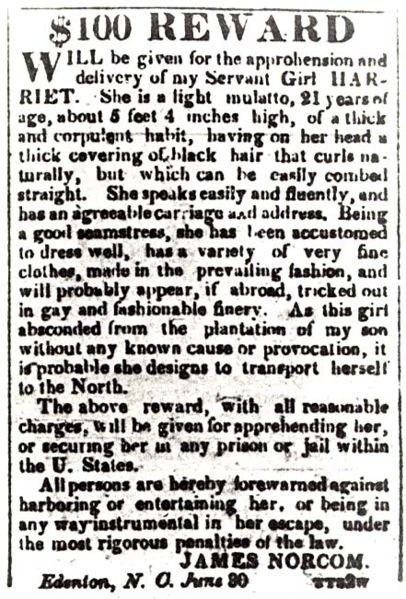
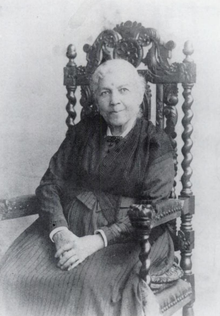
3. Read passage by Harriet Jacobs, a former slave, and Toni Morrison, African-American, Nobel prize-winning novelist.
4. Highlight or underline key details that stand out to you. Discuss them in groups and then full class.

Wednesday, January 28, 2015
Wednesday, January 28
Target: form claims that support both sides of an argument.
1. Continue work on your FORMING CLAIMS chart with your partner.
2. Combine them all here: 2nd period link https://docs.google.com/a/nvusd.org/document/d/1dw5E1AAkZb1qrJqpSCpgzjg7M-7_M0kU4iXvNSJ5-A8/edit
1st period: https://docs.google.com/a/nvusd.org/document/d/1sHZD0WwCKfHHrsng6Q51sxh0_WI7OOVpQUqNaqFwEuQ/edit
1st period: https://docs.google.com/a/nvusd.org/document/d/1sHZD0WwCKfHHrsng6Q51sxh0_WI7OOVpQUqNaqFwEuQ/edit
3. Look up another article from the Week synthesis that might help you generate claims for the other side.
Monday, January 26, 2015
Tuesday, January 27
Target: to collaborate together to find deeper meaning and insight in a text.
1. Mr. Zargar: the AP test
2. Get into groups by number. There will be six of you in each group.
3. Assign a timer and a recorder. The recorder will take notes on this doc. Share it with me!
4. Begin with the Discussion Director. Spend 10 minutes discussing the text, attempting to answer at least one question. See if you can sustain the discussion one question among you for as long as you can.
After 5 minutes, move on to the Illuminator, and so on. I will cue you, although the timer should be in charge of keeping everyone on track.
5. After you are done, check the google doc and be sure to make any additions that the notetaker may have missed. Put your additions in a different color ink.
Sunday, January 25, 2015
Monday, January 26
Target: To practice forming claims about an article on a controversial issue
1. Correct Vocabulary Test from Friday.
2. Read and annotate Mark Berman's article: http://goo.gl/66nu3B
3. Fill out a Forming Claims chart: http://goo.gl/yCVfyH
Make a copy and share it with your partner. Work on completing it together.
HOMEWORK: Preparation for HF tomorrow.
Thursday, January 22, 2015
Friday, January 23
Target: to expand your syntactical "toolkit" to include appositive phrases
1. Vocabulary Test-Lesson 8
2. Sentence Pattern #6 and #7
Use this padlet to post one sentence from each exercise--in partners!
3. SOAPSTone (2nd period is here: https://docs.google.com/document/d/1glijLIS1jG4tIvvPQLwILxQntFQE9tM5fHosp47ksIk/edit)
on "A Shooter, His Victim and Race" by Nicholas Kristof
on "A Shooter, His Victim and Race" by Nicholas Kristof
HOMEWORK: Read through chapter 27 by Tuesday...and complete your preparation for your literature circle role.
Thursday, January 22
Target: Analyzing Details
1. Excerpt from Chapter 19 : From the beginning to the entrance of the Duke and the King.
Analyzing Details Chart:
https://docs.google.com/document/d/1-j71lRcLi_7k1TWPppe_XPS33vohSumpkdurreaEcqU/edit
Chapter 19-22 quiz For discussion purposes today.
1. Huck says, “It didn’t’ take me long to make up my mind that these liars warn’t
no kings nor dukes at all, but just low-down humbugs and frauds.”
Tell me what we learn about these “liars” in the reading last night.
2. Why does Huck pretend to believe them?
3. Compare the incident at the circus with the shooting of Boggs. In what ways
are the situations similar?
4. How does Huck’s response differ from the crowd’s in both instances?
Tuesday, January 20, 2015
Wednesday, January 21
Target: to demonstrate your understanding of the three different types of claims in arguments.
First, an RTI survey and brief vocabulary review.
Can you spot all 3 kinds of claims in "Felons and the Right to Vote"?
Can you make all three kinds of claims?
Let's practice! But first, SOAPS for "A Shooter, His Victim, and Race"
EXIT TICKET: Do you agree or disagree with Kristof's point of view?
Tuesday, January 20
Target: analyze key details in HF so far, chapters 13-18
1. QUIZ: https://docs.google.com/forms/d/10HEzsQiIqeeS3zD4MO__r-U490AweKmps0AxEwKJnLw/viewform This one counts!
2. Share important passages related to theme.
Friday, January 16, 2015
Friday, January 16
2nd period only: Driving question for today: http://goo.gl/Ufhnyc
- In groups of 4, share your review, presenting the claim and the criteria that the writer presents in the review. Document it Oldest Make a copy of this.
- Read "The C Word in the Hallways", noting the types of presented.
- Read "Felons and the Right to Vote", marking the types of claims in the margins. Discuss how they work in the essay as a group, and then as a full class.
STAKING A CLAIM: Write three different claims for one controversial issue.
Wednesday, January 14, 2015
Thursday, January 15
Target: to find themes in Huck Finn up to chapter 12
1. Reading check:http://goo.gl/TQgAAk
3. Passage: http://goo.gl/CHnI3m
Tuesday, January 13, 2015
Wednesday, January 14
Target: to identify different kinds of claims in argument
- claims of fact assert that something is true or not true.
Zimbabwe has an unstable government.
Restaurants on Main Street are more popular with older patrons than younger ones.
Fast food is a way of life.
Women are more talkative than men.
- claims of value argues that something is good or bad, right or wrong, desirable or undesirable. They can be based on on taste, or objective evaluations.
Ryan Gosling is the best leading man in Hollywood.
While Ryan Gosling might be the best-looking actor in Hollywood, Robert Downey, Jr. is more highly paid and his movies tend to make more money.
- claims of policy propose a change. Arguments of policy often begin with claims of fact and lead to claims of value.
SUV owners should be required to pay an energy surcharge.
(text from Conversations in American Literature, Bedford St. Martin's, 2015)
Tuesday, January 13
Target: to read closely in order to identify and discuss important details in the text
1. Quick Start Quiz: HF Chapters 1-7
2. Theme Map/Crowd source doc: http://goo.gl/ekkEMp
3. Rhetorical Analysis: Chapter 3 passage
Monday, January 12, 2015
Subscribe to:
Posts (Atom)